After a lot of work planing the piece selected for the top to thickness (about 3.5 to 4mm), it was ready for steaming. Unfortunately the piano soundboard was made from lots of butt jointed pieces, and I had to have a flat panel made from three of these, since there are lots of bits attached to a piano soundboard which restrict the areas clear from holes. I knew that the joins would be glued with hide glue – so were guaranteed to come apart during the steaming process! However, I was pretty convinced that I would be able to re-glue them once the top was shaped.
Here’s everything put together, and slowly cooking.
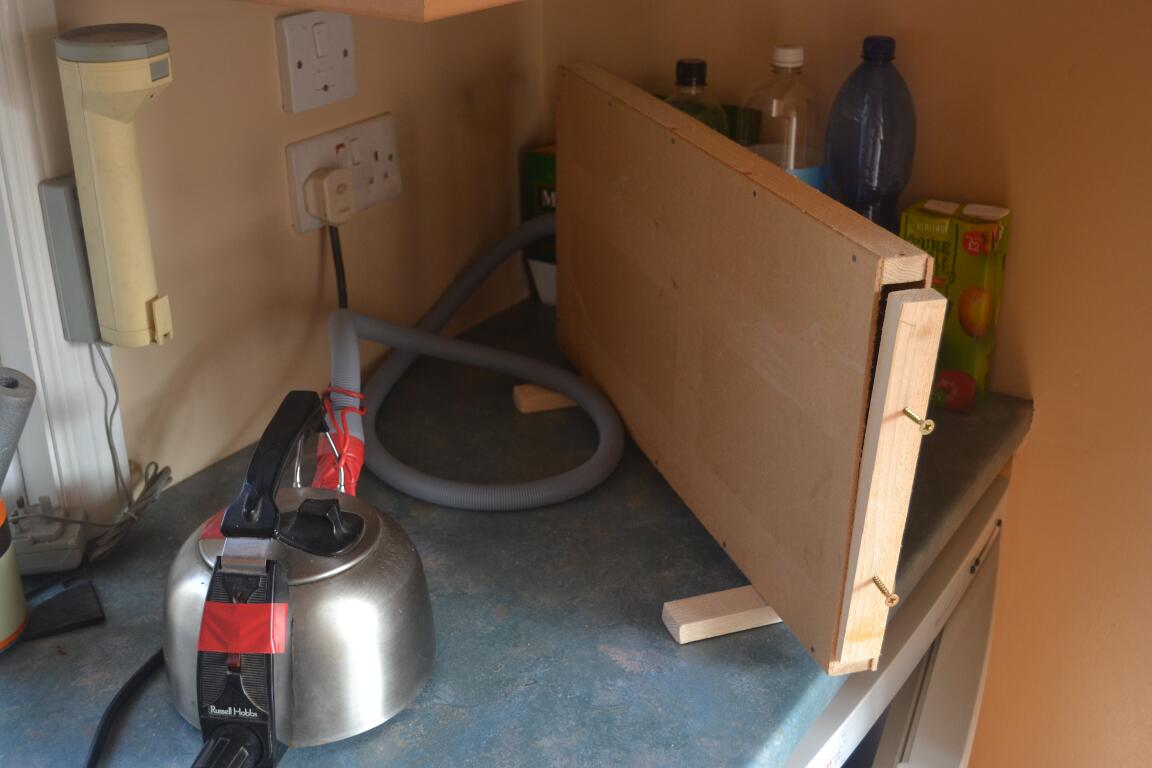
I steamed it for about 40-45 minutes, and this was certainly enough. Even at half time, the individual pieces had become unglued as expected, and started to bend at the wood absorbed moisture.
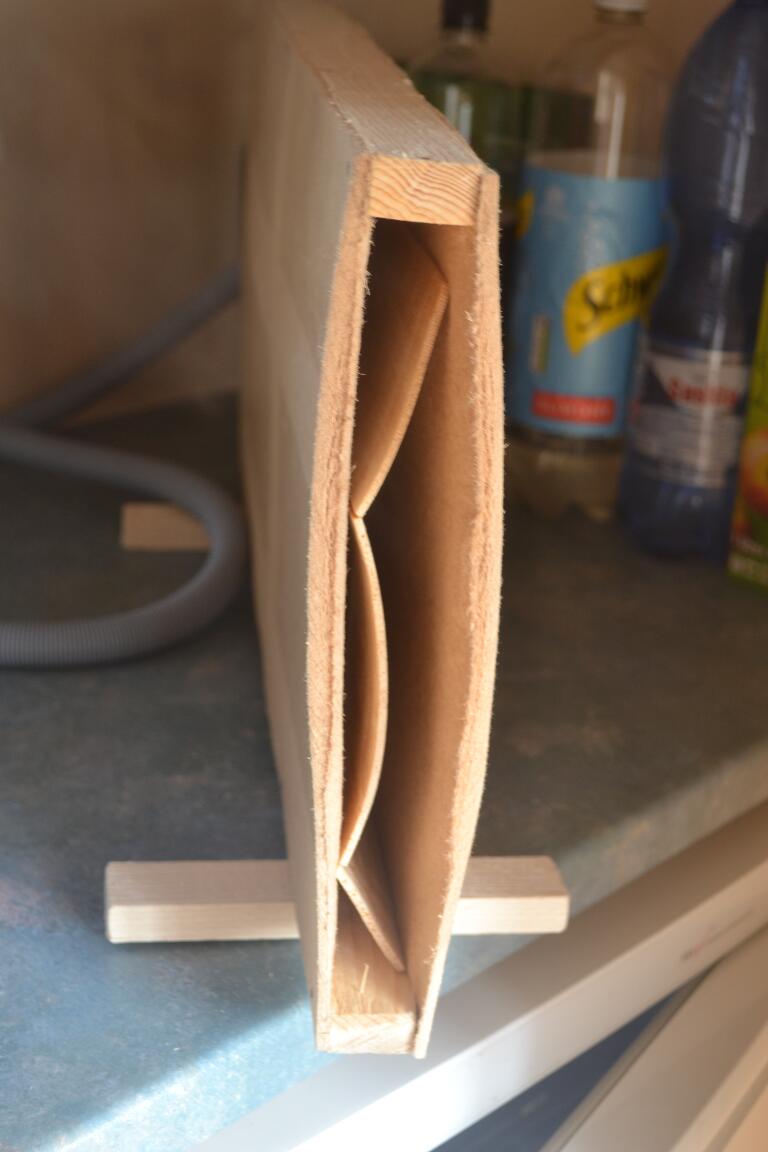
Once taken out of the steam box, the sections were fitted back together in the mould, making use of the natural bending.
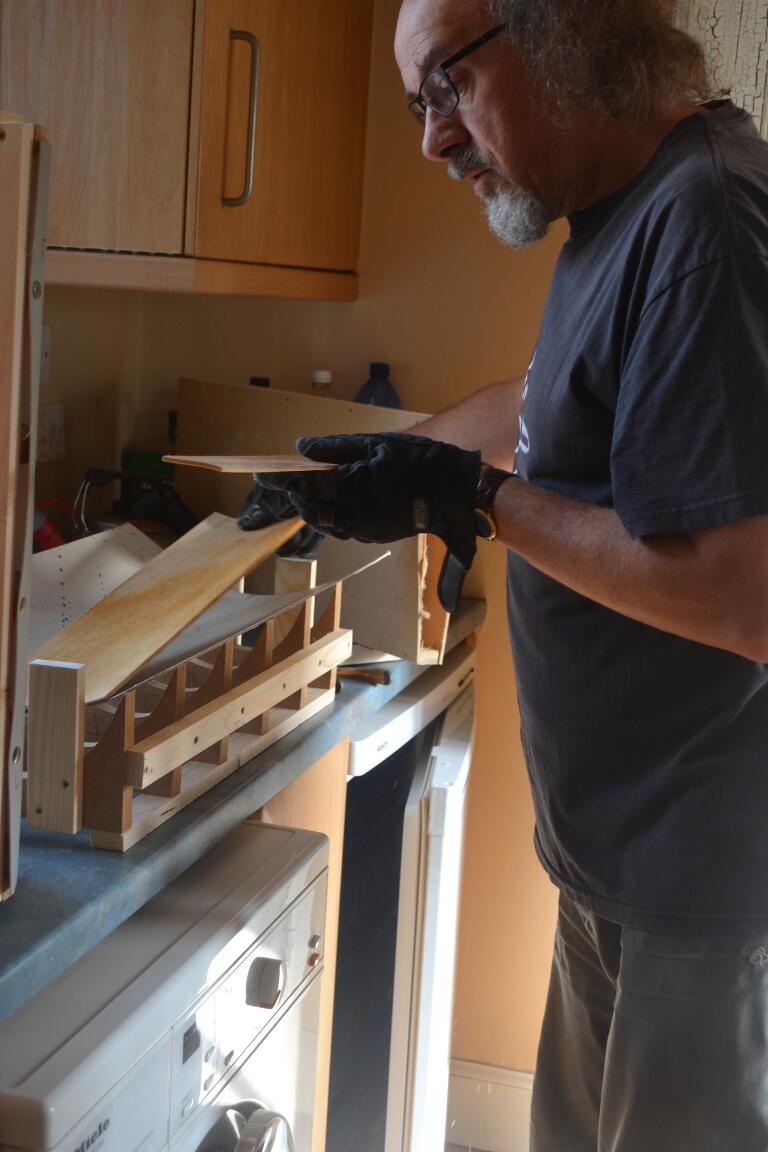
Then the top of the mould was fitted in and pushed down to form the curve of the instrument top.
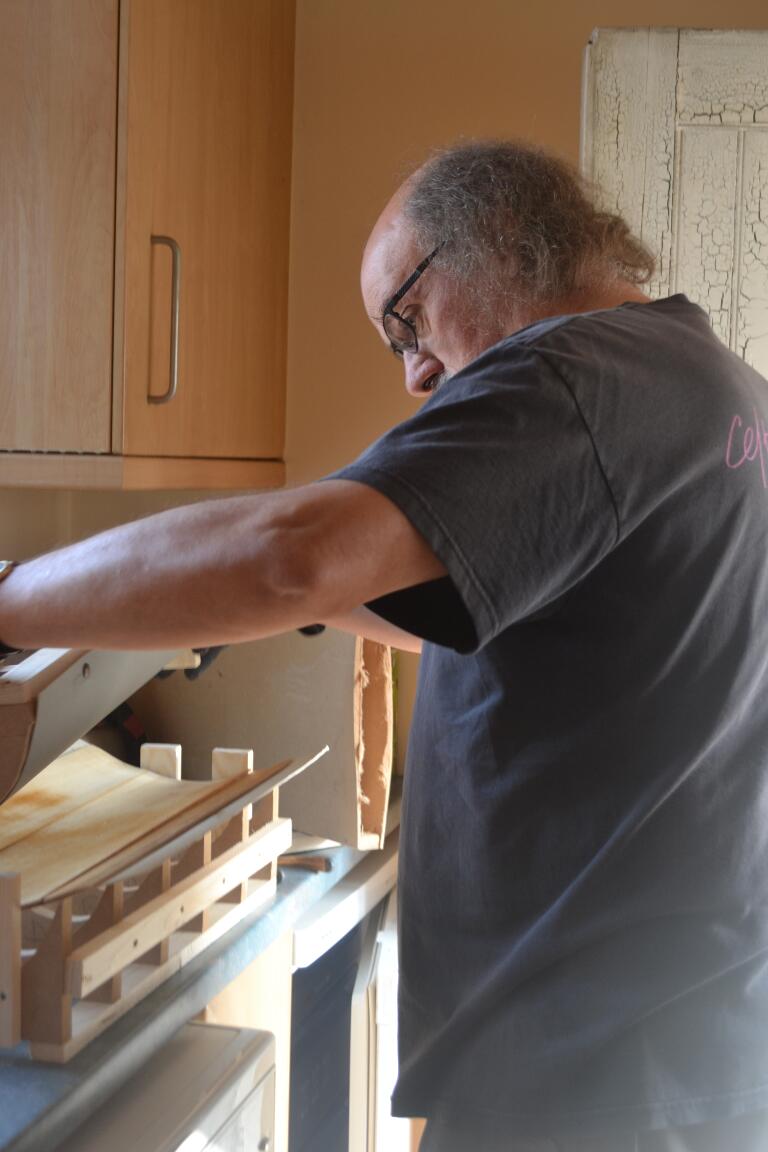
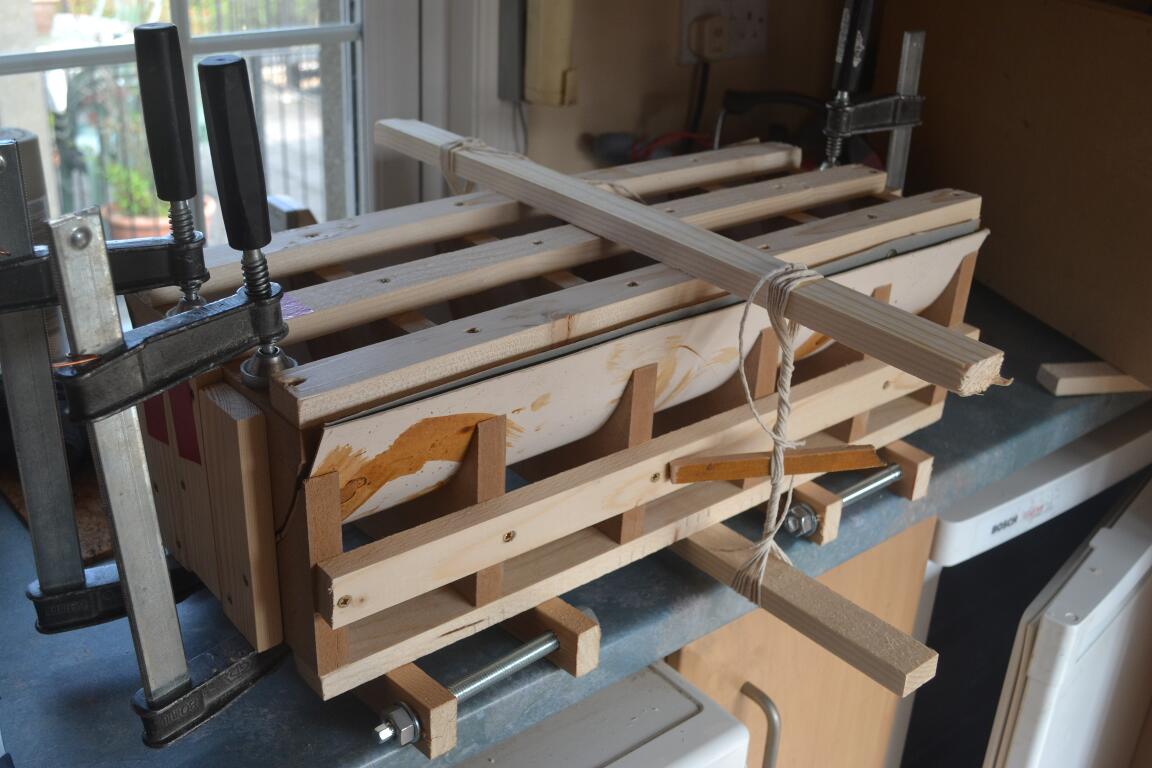
Finally, the mould was clamped tight – a Spanish windlass came in useful here. You can see the pieces of the top are protected from the corners on the mould form by using some thickish cardboard.